The measure is what stays behind.
The purpose of Zeebaran's work is not only to build capabilities, but to leave behind stronger growers, healthier orchards, and more capable horticultural systems.
Impact is measured not by activity alone, but by the changes that remain after the work is done.
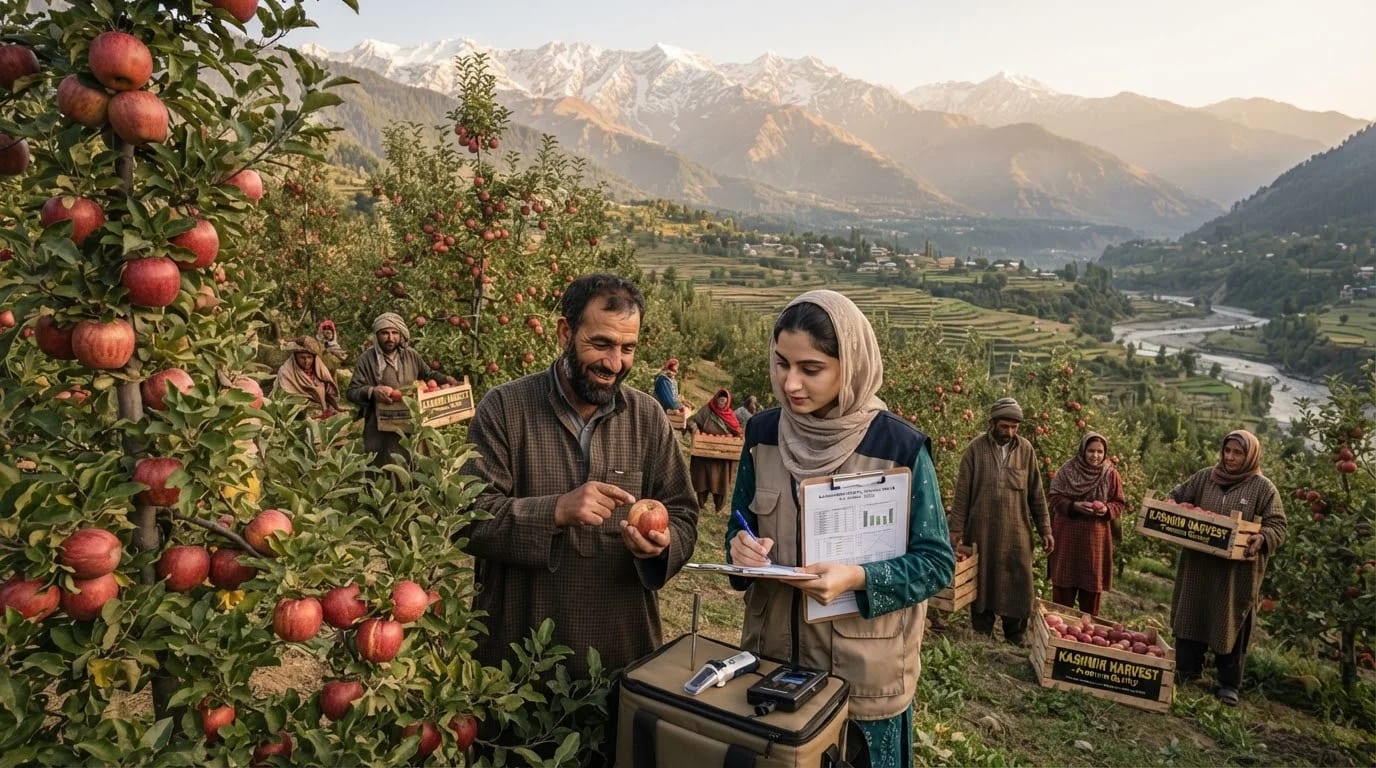
Four things the work should leave behind.
Zeebaran's work is intended to leave behind more than infrastructure or services.
Productivity
Higher productivity begins long before harvest. Better planting material, orchard design, and timely field support help orchards produce more consistently and remain productive over time.
Soil and Plant Health
Healthy orchards depend on healthy biological systems. Understanding local conditions and responding to them appropriately builds resilience while reducing avoidable intervention.
Value Preservation
Quality is protected through grading, processing, controlled-atmosphere storage, and reliable market access, allowing growers to retain more of the value they have already created.
Agency
Knowledge creates value only when people can act on it. Growers should leave with greater confidence to make informed decisions about their orchards, their produce, and their future.
Every number, with its definition.
A figure without a definition is a claim. Every number published by Zeebaran is accompanied by a clear definition, the period it covers, and the basis on which it has been measured.
Advisory, inputs, orchard services or procurement engagement from Zeebaran.
Area established or redeveloped under Zeebaran, including site preparation and installation.
Individual orchards established under Zeebaran orchard development in a single season.
Installed controlled-atmosphere and cold storage across Zeebaran facilities.
Continuous operating history in fruit production, infrastructure and market access.
Documented outcomes only. Nothing published without evidence or consent.
Every published story is supported by evidence and shared with permission. Each case includes a participant (named or appropriately anonymised), a location, a defined timeframe, a documented evidence source, and at least one measurable outcome.
Until these conditions are met, it remains unpublished.
Claims require context.
A number without context can be misleading. The purpose of measurement is not to make figures appear larger, but to make them meaningful, comparable, and useful.
Measurement is only useful when others can understand what a figure represents, how it was derived, and what it does, and does not, claim.
- A clear definition of what is being measured
- The period it covers
- An as-of date
- A named data owner
- A baseline, where relevant
- A clear distinction between current results, targets, and future ambition
The test is not whether people need Zeebaran more. It is whether they can do more without it.
The purpose of Zeebaran's work is to expand capability, not dependence. Growers should leave with greater knowledge, stronger choices, and more confidence in the decisions they make about their orchards and livelihoods.
The measure of success is not how often Zeebaran is needed. It is whether better practice continues because growers have the ability to sustain it themselves.

Ask for the evidence.
If you are assessing Zeebaran as a partner, an investor, or an institution, we would rather share our definitions, methodologies, and evidence than rely on adjectives.
We believe evidence should be available to those making important decisions.